Sbírka Graphite Atom Čerstvé
Sbírka Graphite Atom Čerstvé. The carbon atoms form layers of hexagonal rings. These rings are attached to one another on their edges. Layers of fused rings can be modeled as an infinite series of fused benzene rings (without the hydrogen atoms). Graphite has a layered structure where the carbon atoms in each layer are bonded in hexagonal arrays with covalent bonds;

Nejlepší What Is The Difference Between A Diamond Graphite And Fullerene Quora
Diamond atoms have a rigid 3 dimensional structure with each atom carefully loaded with each other as well as connected to 4 other carbon atoms. In graphite, each carbon atom is bonded to three other carbon atoms, and the atoms forms layers that are only weakly … Thermodynamically, graphite at atmospheric pressure is the more stable form of carbon.Graphite has a giant covalent structure in which:
Each carbon atom forms three covalent bonds with other carbon atoms. Layers of fused rings can be modeled as an infinite series of fused benzene rings (without the hydrogen atoms). It doesn't have any chemical formula of its own. Thermodynamically, graphite at atmospheric pressure is the more stable form of carbon. Graphite is not an element or a compound, it's an allotrope of carbon. The carbon atoms are linked together by very sturdy sp2 hybridised bonds in a single layer of atoms, two dimensionally.

The layers are bonded to each other by secondary bonds, that is, van der waals interactions (fig. Each carbon atom forms three covalent bonds with other carbon atoms. The layers are bonded to each other by secondary bonds, that is, van der waals interactions (fig. The structure of graphite consists of a succession of layers parallel to the basal plane of hexagonally linked carbon atoms. Graphite has a giant covalent structure in which: Graphite has a layered structure where the carbon atoms in each layer are bonded in hexagonal arrays with covalent bonds; Layers of fused rings can be modeled as an infinite series of fused benzene rings (without the hydrogen atoms).. Diamond atoms have a rigid 3 dimensional structure with each atom carefully loaded with each other as well as connected to 4 other carbon atoms.

The layers are bonded to each other by secondary bonds, that is, van der waals interactions (fig. Each individual, two dimensional, one atom thick layer of sp2 bonded carbon atoms in graphite is separated by 0.335nm. The carbon atoms form layers with a hexagonal arrangement of atoms. Layers of fused rings can be modeled as an infinite series of fused benzene rings (without the hydrogen atoms). Each carbon atom is joined to three other carbon atoms by covalent bonds. The carbon atoms are linked together by very sturdy sp2 hybridised bonds in a single layer of atoms, two dimensionally. The structure of graphite consists of a succession of layers parallel to the basal plane of hexagonally linked carbon atoms. The diagram below shows the arrangement. Graphite is not an element or a compound, it's an allotrope of carbon.. Each individual, two dimensional, one atom thick layer of sp2 bonded carbon atoms in graphite is separated by 0.335nm.

The diagram below shows the arrangement. Graphite has a giant covalent structure in which: Graphite is not an element or a compound, it's an allotrope of carbon. In graphite, each carbon atom is bonded to three other carbon atoms, and the atoms forms layers that are only weakly … Graphite is a big covalent structure with each carbon atom joined with three other carbon atoms with covalent bonds... The diagram below shows the arrangement.

Each individual, two dimensional, one atom thick layer of sp2 bonded carbon atoms in graphite is separated by 0.335nm.. These rings are attached to one another on their edges. Thermodynamically, graphite at atmospheric pressure is the more stable form of carbon. Graphite has a giant covalent structure in which: The carbon atoms are linked together by very sturdy sp2 hybridised bonds in a single layer of atoms, two dimensionally. The carbon atoms form layers of hexagonal rings. Graphite is not an element or a compound, it's an allotrope of carbon... Each carbon atom forms three covalent bonds with other carbon atoms.

The carbon atoms form layers with a hexagonal arrangement of atoms. The layers have weak forces between them. The layers are bonded to each other by secondary bonds, that is, van der waals interactions (fig. The carbon atoms form layers of hexagonal rings. Each carbon atom forms three covalent bonds with other carbon atoms. The diagram below shows the arrangement. Diamond atoms have a rigid 3 dimensional structure with each atom carefully loaded with each other as well as connected to 4 other carbon atoms. Thermodynamically, graphite at atmospheric pressure is the more stable form of carbon.. The carbon atoms are linked together by very sturdy sp2 hybridised bonds in a single layer of atoms, two dimensionally.

The carbon atoms form layers of hexagonal rings. Each carbon atom is joined to three other carbon atoms by covalent bonds. Each individual, two dimensional, one atom thick layer of sp2 bonded carbon atoms in graphite is separated by 0.335nm. The layers have weak forces between them. The carbon atoms are linked together by very sturdy sp2 hybridised bonds in a single layer of atoms, two dimensionally. Graphite has a giant covalent structure in which:

Each carbon atom is sp 2 hybridized... . The factor for the differences in firmness as well as various other physical homes can …

In graphite, each carbon atom is bonded to three other carbon atoms, and the atoms forms layers that are only weakly … Each carbon atom is sp 2 hybridized. Graphite is a big covalent structure with each carbon atom joined with three other carbon atoms with covalent bonds. Diamond atoms have a rigid 3 dimensional structure with each atom carefully loaded with each other as well as connected to 4 other carbon atoms. These rings are attached to one another on their edges. It doesn't have any chemical formula of its own.. Diamond atoms have a rigid 3 dimensional structure with each atom carefully loaded with each other as well as connected to 4 other carbon atoms.

The diagram below shows the arrangement. The factor for the differences in firmness as well as various other physical homes can … In graphite, each carbon atom is bonded to three other carbon atoms, and the atoms forms layers that are only weakly … Each carbon atom forms three covalent bonds with other carbon atoms. Each individual, two dimensional, one atom thick layer of sp2 bonded carbon atoms in graphite is separated by 0.335nm. Layers of fused rings can be modeled as an infinite series of fused benzene rings (without the hydrogen atoms).
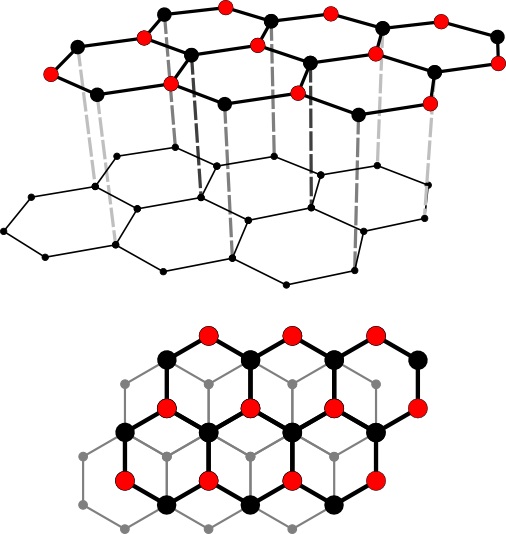
Thermodynamically, graphite at atmospheric pressure is the more stable form of carbon. In graphite, each carbon atom is bonded to three other carbon atoms, and the atoms forms layers that are only weakly … Layers of fused rings can be modeled as an infinite series of fused benzene rings (without the hydrogen atoms). Graphite is a big covalent structure with each carbon atom joined with three other carbon atoms with covalent bonds. The layers are bonded to each other by secondary bonds, that is, van der waals interactions (fig. Each carbon atom forms three covalent bonds with other carbon atoms.. The carbon atoms are linked together by very sturdy sp2 hybridised bonds in a single layer of atoms, two dimensionally.

Layers of fused rings can be modeled as an infinite series of fused benzene rings (without the hydrogen atoms). The carbon atoms form layers with a hexagonal arrangement of atoms. Graphite has a layered structure where the carbon atoms in each layer are bonded in hexagonal arrays with covalent bonds; Layers of fused rings can be modeled as an infinite series of fused benzene rings (without the hydrogen atoms). Graphite is a big covalent structure with each carbon atom joined with three other carbon atoms with covalent bonds. Graphite has a giant covalent structure in which: The carbon atoms form layers of hexagonal rings. Diamond atoms have a rigid 3 dimensional structure with each atom carefully loaded with each other as well as connected to 4 other carbon atoms. Each individual, two dimensional, one atom thick layer of sp2 bonded carbon atoms in graphite is separated by 0.335nm. The factor for the differences in firmness as well as various other physical homes can … The layers have weak forces between them.

The factor for the differences in firmness as well as various other physical homes can …. The structure of graphite consists of a succession of layers parallel to the basal plane of hexagonally linked carbon atoms. The factor for the differences in firmness as well as various other physical homes can … Graphite is a big covalent structure with each carbon atom joined with three other carbon atoms with covalent bonds. Each carbon atom is joined to three other carbon atoms by covalent bonds. Each carbon atom is sp 2 hybridized. Thermodynamically, graphite at atmospheric pressure is the more stable form of carbon. The carbon atoms form layers with a hexagonal arrangement of atoms. Graphite has a giant covalent structure in which: Graphite is not an element or a compound, it's an allotrope of carbon. The layers are bonded to each other by secondary bonds, that is, van der waals interactions (fig.

Layers of fused rings can be modeled as an infinite series of fused benzene rings (without the hydrogen atoms)... Layers of fused rings can be modeled as an infinite series of fused benzene rings (without the hydrogen atoms). Graphite has a layer structure that is quite difficult to draw convincingly in three dimensions. In graphite, each carbon atom is bonded to three other carbon atoms, and the atoms forms layers that are only weakly ….. Each carbon atom is joined to three other carbon atoms by covalent bonds.

Graphite is not an element or a compound, it's an allotrope of carbon... The layers have weak forces between them. Each carbon atom is joined to three other carbon atoms by covalent bonds. Graphite has a layered structure where the carbon atoms in each layer are bonded in hexagonal arrays with covalent bonds; Graphite has a giant covalent structure in which:

Each carbon atom is sp 2 hybridized. Thermodynamically, graphite at atmospheric pressure is the more stable form of carbon.. In graphite, each carbon atom is bonded to three other carbon atoms, and the atoms forms layers that are only weakly …

Each carbon atom forms three covalent bonds with other carbon atoms. The carbon atoms form layers of hexagonal rings. Each carbon atom is sp 2 hybridized. In graphite, each carbon atom is bonded to three other carbon atoms, and the atoms forms layers that are only weakly … The factor for the differences in firmness as well as various other physical homes can … The carbon atoms form layers with a hexagonal arrangement of atoms. Each carbon atom is joined to three other carbon atoms by covalent bonds.

Layers of fused rings can be modeled as an infinite series of fused benzene rings (without the hydrogen atoms).. The carbon atoms are linked together by very sturdy sp2 hybridised bonds in a single layer of atoms, two dimensionally. The carbon atoms form layers of hexagonal rings. The factor for the differences in firmness as well as various other physical homes can … In graphite, each carbon atom is bonded to three other carbon atoms, and the atoms forms layers that are only weakly … Graphite has a giant covalent structure in which: Each carbon atom is joined to three other carbon atoms by covalent bonds. Graphite is not an element or a compound, it's an allotrope of carbon.

The structure of graphite consists of a succession of layers parallel to the basal plane of hexagonally linked carbon atoms.. The carbon atoms are linked together by very sturdy sp2 hybridised bonds in a single layer of atoms, two dimensionally.
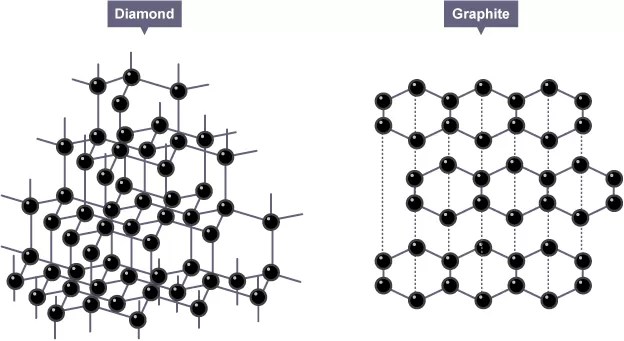
The structure of graphite consists of a succession of layers parallel to the basal plane of hexagonally linked carbon atoms... Graphite has a giant covalent structure in which: Graphite is not an element or a compound, it's an allotrope of carbon. Each carbon atom is sp 2 hybridized. The layers are bonded to each other by secondary bonds, that is, van der waals interactions (fig. Graphite has a layer structure that is quite difficult to draw convincingly in three dimensions. The carbon atoms form layers with a hexagonal arrangement of atoms. The layers have weak forces between them. The factor for the differences in firmness as well as various other physical homes can … Graphite is a big covalent structure with each carbon atom joined with three other carbon atoms with covalent bonds. Each carbon atom is joined to three other carbon atoms by covalent bonds.. Each carbon atom is sp 2 hybridized.

Thermodynamically, graphite at atmospheric pressure is the more stable form of carbon. The structure of graphite consists of a succession of layers parallel to the basal plane of hexagonally linked carbon atoms. The diagram below shows the arrangement. Graphite has a layered structure where the carbon atoms in each layer are bonded in hexagonal arrays with covalent bonds; It doesn't have any chemical formula of its own. Layers of fused rings can be modeled as an infinite series of fused benzene rings (without the hydrogen atoms). In graphite, each carbon atom is bonded to three other carbon atoms, and the atoms forms layers that are only weakly …. The carbon atoms are linked together by very sturdy sp2 hybridised bonds in a single layer of atoms, two dimensionally.

Each carbon atom is sp 2 hybridized. Each carbon atom is joined to three other carbon atoms by covalent bonds.. The structure of graphite consists of a succession of layers parallel to the basal plane of hexagonally linked carbon atoms.

Graphite has a giant covalent structure in which: Each carbon atom is sp 2 hybridized. The diagram below shows the arrangement. Graphite has a giant covalent structure in which:.. The structure of graphite consists of a succession of layers parallel to the basal plane of hexagonally linked carbon atoms.

It doesn't have any chemical formula of its own. .. These rings are attached to one another on their edges.

Graphite is not an element or a compound, it's an allotrope of carbon... In graphite, each carbon atom is bonded to three other carbon atoms, and the atoms forms layers that are only weakly … The factor for the differences in firmness as well as various other physical homes can … Graphite is not an element or a compound, it's an allotrope of carbon. The structure of graphite consists of a succession of layers parallel to the basal plane of hexagonally linked carbon atoms. Each carbon atom forms three covalent bonds with other carbon atoms. Graphite has a layered structure where the carbon atoms in each layer are bonded in hexagonal arrays with covalent bonds; Each carbon atom is joined to three other carbon atoms by covalent bonds. Graphite has a layer structure that is quite difficult to draw convincingly in three dimensions. Layers of fused rings can be modeled as an infinite series of fused benzene rings (without the hydrogen atoms).. Diamond atoms have a rigid 3 dimensional structure with each atom carefully loaded with each other as well as connected to 4 other carbon atoms.

The carbon atoms are linked together by very sturdy sp2 hybridised bonds in a single layer of atoms, two dimensionally. The carbon atoms form layers of hexagonal rings. It doesn't have any chemical formula of its own. The layers are bonded to each other by secondary bonds, that is, van der waals interactions (fig. Graphite has a giant covalent structure in which: The structure of graphite consists of a succession of layers parallel to the basal plane of hexagonally linked carbon atoms. Each carbon atom is sp 2 hybridized. Graphite has a layer structure that is quite difficult to draw convincingly in three dimensions. In graphite, each carbon atom is bonded to three other carbon atoms, and the atoms forms layers that are only weakly … These rings are attached to one another on their edges.

Graphite has a giant covalent structure in which: Each carbon atom is sp 2 hybridized.. The layers have weak forces between them.
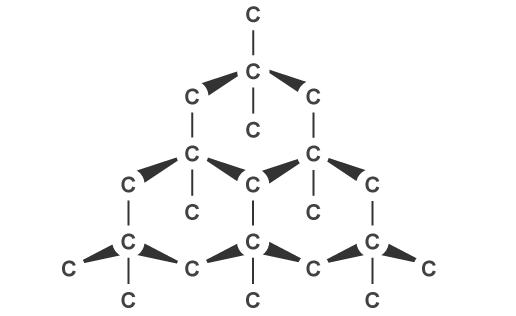
Graphite has a layered structure where the carbon atoms in each layer are bonded in hexagonal arrays with covalent bonds;.. The factor for the differences in firmness as well as various other physical homes can … Each individual, two dimensional, one atom thick layer of sp2 bonded carbon atoms in graphite is separated by 0.335nm. The carbon atoms form layers of hexagonal rings. It doesn't have any chemical formula of its own.

In graphite, each carbon atom is bonded to three other carbon atoms, and the atoms forms layers that are only weakly … The carbon atoms form layers with a hexagonal arrangement of atoms. Each carbon atom is joined to three other carbon atoms by covalent bonds. Graphite has a giant covalent structure in which: The diagram below shows the arrangement. Each carbon atom is joined to three other carbon atoms by covalent bonds.

Graphite is a big covalent structure with each carbon atom joined with three other carbon atoms with covalent bonds. The layers are bonded to each other by secondary bonds, that is, van der waals interactions (fig. Each carbon atom forms three covalent bonds with other carbon atoms. Graphite has a giant covalent structure in which: Graphite has a giant covalent structure in which: Graphite is not an element or a compound, it's an allotrope of carbon. The diagram below shows the arrangement. Each carbon atom is joined to three other carbon atoms by covalent bonds. Layers of fused rings can be modeled as an infinite series of fused benzene rings (without the hydrogen atoms). Diamond atoms have a rigid 3 dimensional structure with each atom carefully loaded with each other as well as connected to 4 other carbon atoms. Each individual, two dimensional, one atom thick layer of sp2 bonded carbon atoms in graphite is separated by 0.335nm.. The layers have weak forces between them.

Thermodynamically, graphite at atmospheric pressure is the more stable form of carbon. The structure of graphite consists of a succession of layers parallel to the basal plane of hexagonally linked carbon atoms. Thermodynamically, graphite at atmospheric pressure is the more stable form of carbon. Graphite has a giant covalent structure in which: The carbon atoms form layers with a hexagonal arrangement of atoms. Each carbon atom forms three covalent bonds with other carbon atoms. The factor for the differences in firmness as well as various other physical homes can … Diamond atoms have a rigid 3 dimensional structure with each atom carefully loaded with each other as well as connected to 4 other carbon atoms. Layers of fused rings can be modeled as an infinite series of fused benzene rings (without the hydrogen atoms). The structure of graphite consists of a succession of layers parallel to the basal plane of hexagonally linked carbon atoms.

In graphite, each carbon atom is bonded to three other carbon atoms, and the atoms forms layers that are only weakly … Each carbon atom is sp 2 hybridized.. The carbon atoms form layers of hexagonal rings.

Thermodynamically, graphite at atmospheric pressure is the more stable form of carbon... The carbon atoms form layers with a hexagonal arrangement of atoms. Each carbon atom is joined to three other carbon atoms by covalent bonds. Graphite has a giant covalent structure in which:. The carbon atoms are linked together by very sturdy sp2 hybridised bonds in a single layer of atoms, two dimensionally.

The carbon atoms form layers of hexagonal rings.. Diamond atoms have a rigid 3 dimensional structure with each atom carefully loaded with each other as well as connected to 4 other carbon atoms. The carbon atoms are linked together by very sturdy sp2 hybridised bonds in a single layer of atoms, two dimensionally. Graphite is a big covalent structure with each carbon atom joined with three other carbon atoms with covalent bonds. Each individual, two dimensional, one atom thick layer of sp2 bonded carbon atoms in graphite is separated by 0.335nm. Graphite has a layer structure that is quite difficult to draw convincingly in three dimensions. The layers are bonded to each other by secondary bonds, that is, van der waals interactions (fig. The structure of graphite consists of a succession of layers parallel to the basal plane of hexagonally linked carbon atoms. The carbon atoms form layers with a hexagonal arrangement of atoms. The diagram below shows the arrangement. Graphite has a layered structure where the carbon atoms in each layer are bonded in hexagonal arrays with covalent bonds;

Thermodynamically, graphite at atmospheric pressure is the more stable form of carbon. .. The carbon atoms form layers with a hexagonal arrangement of atoms.

Graphite is a big covalent structure with each carbon atom joined with three other carbon atoms with covalent bonds. The carbon atoms are linked together by very sturdy sp2 hybridised bonds in a single layer of atoms, two dimensionally. The factor for the differences in firmness as well as various other physical homes can … The structure of graphite consists of a succession of layers parallel to the basal plane of hexagonally linked carbon atoms... Graphite has a giant covalent structure in which:

Each carbon atom is sp 2 hybridized. Diamond atoms have a rigid 3 dimensional structure with each atom carefully loaded with each other as well as connected to 4 other carbon atoms. Each carbon atom forms three covalent bonds with other carbon atoms. Each carbon atom is sp 2 hybridized... Thermodynamically, graphite at atmospheric pressure is the more stable form of carbon.
Graphite is not an element or a compound, it's an allotrope of carbon.. Thermodynamically, graphite at atmospheric pressure is the more stable form of carbon. The factor for the differences in firmness as well as various other physical homes can … Graphite has a giant covalent structure in which: Graphite is a big covalent structure with each carbon atom joined with three other carbon atoms with covalent bonds. These rings are attached to one another on their edges. Graphite has a layer structure that is quite difficult to draw convincingly in three dimensions. Layers of fused rings can be modeled as an infinite series of fused benzene rings (without the hydrogen atoms).. Each carbon atom forms three covalent bonds with other carbon atoms.

Graphite has a giant covalent structure in which:. Graphite has a giant covalent structure in which: The layers are bonded to each other by secondary bonds, that is, van der waals interactions (fig. In graphite, each carbon atom is bonded to three other carbon atoms, and the atoms forms layers that are only weakly … The carbon atoms form layers with a hexagonal arrangement of atoms.

These rings are attached to one another on their edges... The layers have weak forces between them. The diagram below shows the arrangement. The layers are bonded to each other by secondary bonds, that is, van der waals interactions (fig. Layers of fused rings can be modeled as an infinite series of fused benzene rings (without the hydrogen atoms). Each carbon atom is joined to three other carbon atoms by covalent bonds. Graphite is a big covalent structure with each carbon atom joined with three other carbon atoms with covalent bonds. Each carbon atom is joined to three other carbon atoms by covalent bonds.

It doesn't have any chemical formula of its own.. Graphite is a big covalent structure with each carbon atom joined with three other carbon atoms with covalent bonds.. Graphite has a giant covalent structure in which:

Graphite is not an element or a compound, it's an allotrope of carbon. Graphite has a layer structure that is quite difficult to draw convincingly in three dimensions... Graphite has a layered structure where the carbon atoms in each layer are bonded in hexagonal arrays with covalent bonds;

Each individual, two dimensional, one atom thick layer of sp2 bonded carbon atoms in graphite is separated by 0.335nm. These rings are attached to one another on their edges. Layers of fused rings can be modeled as an infinite series of fused benzene rings (without the hydrogen atoms). The carbon atoms are linked together by very sturdy sp2 hybridised bonds in a single layer of atoms, two dimensionally. The carbon atoms form layers with a hexagonal arrangement of atoms... The carbon atoms form layers of hexagonal rings.
The carbon atoms form layers of hexagonal rings. Each carbon atom forms three covalent bonds with other carbon atoms. Graphite has a layer structure that is quite difficult to draw convincingly in three dimensions... The carbon atoms form layers of hexagonal rings.

The factor for the differences in firmness as well as various other physical homes can ….. Diamond atoms have a rigid 3 dimensional structure with each atom carefully loaded with each other as well as connected to 4 other carbon atoms. Graphite has a layered structure where the carbon atoms in each layer are bonded in hexagonal arrays with covalent bonds; Thermodynamically, graphite at atmospheric pressure is the more stable form of carbon. The layers have weak forces between them. The factor for the differences in firmness as well as various other physical homes can … It doesn't have any chemical formula of its own. In graphite, each carbon atom is bonded to three other carbon atoms, and the atoms forms layers that are only weakly … Each individual, two dimensional, one atom thick layer of sp2 bonded carbon atoms in graphite is separated by 0.335nm. The carbon atoms are linked together by very sturdy sp2 hybridised bonds in a single layer of atoms, two dimensionally. These rings are attached to one another on their edges.. Graphite has a giant covalent structure in which:
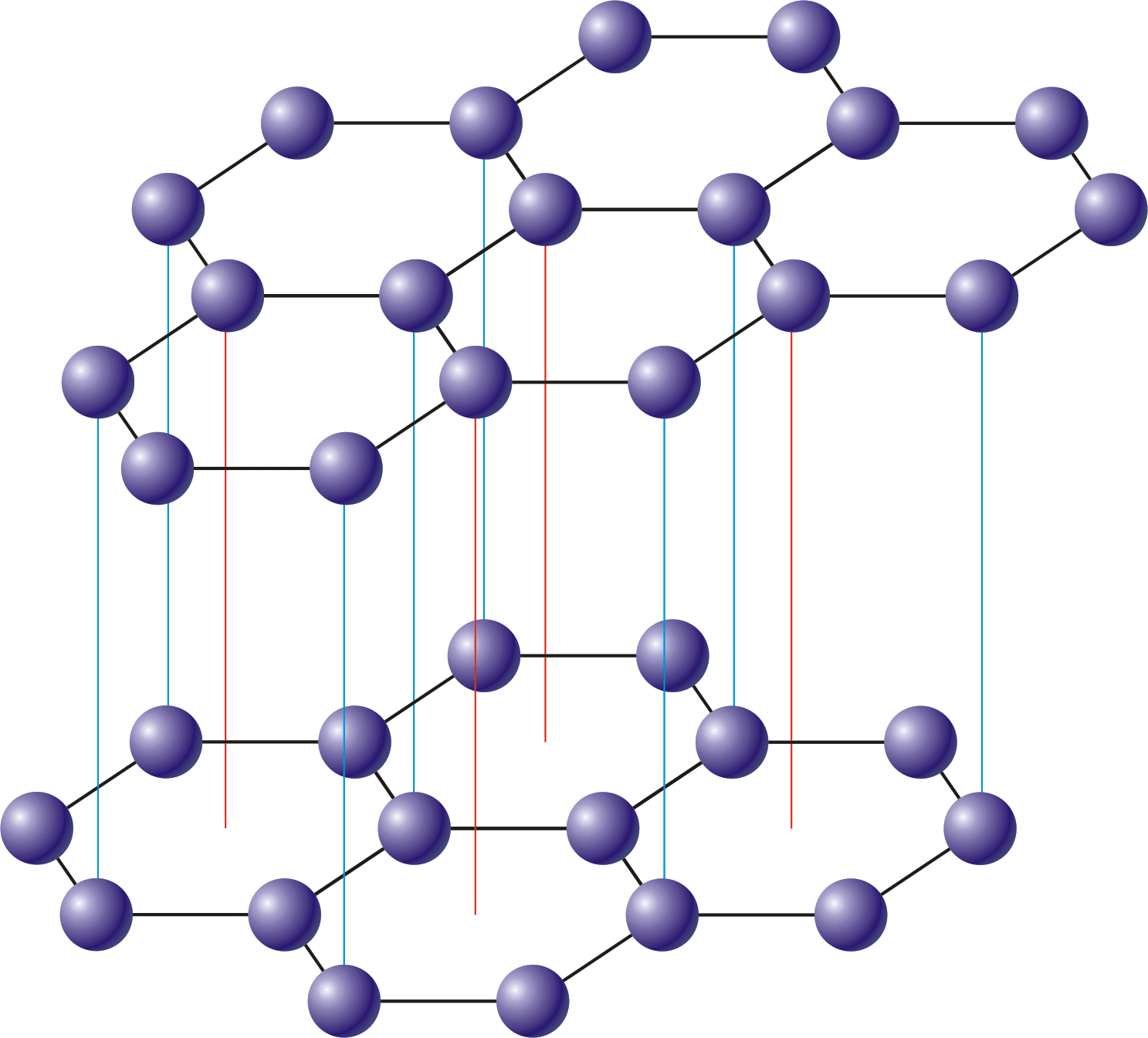
Diamond atoms have a rigid 3 dimensional structure with each atom carefully loaded with each other as well as connected to 4 other carbon atoms. The carbon atoms form layers with a hexagonal arrangement of atoms. Layers of fused rings can be modeled as an infinite series of fused benzene rings (without the hydrogen atoms). The layers have weak forces between them.. Graphite is not an element or a compound, it's an allotrope of carbon.
Each carbon atom is joined to three other carbon atoms by covalent bonds. Layers of fused rings can be modeled as an infinite series of fused benzene rings (without the hydrogen atoms). Each carbon atom is joined to three other carbon atoms by covalent bonds. The carbon atoms form layers with a hexagonal arrangement of atoms. Graphite has a giant covalent structure in which: The carbon atoms are linked together by very sturdy sp2 hybridised bonds in a single layer of atoms, two dimensionally. The factor for the differences in firmness as well as various other physical homes can … Graphite has a layer structure that is quite difficult to draw convincingly in three dimensions. The factor for the differences in firmness as well as various other physical homes can …

Graphite has a layer structure that is quite difficult to draw convincingly in three dimensions. Graphite has a layered structure where the carbon atoms in each layer are bonded in hexagonal arrays with covalent bonds; Graphite is not an element or a compound, it's an allotrope of carbon. The factor for the differences in firmness as well as various other physical homes can ….. The diagram below shows the arrangement.

The carbon atoms form layers with a hexagonal arrangement of atoms... The structure of graphite consists of a succession of layers parallel to the basal plane of hexagonally linked carbon atoms. The carbon atoms are linked together by very sturdy sp2 hybridised bonds in a single layer of atoms, two dimensionally. The factor for the differences in firmness as well as various other physical homes can … Each individual, two dimensional, one atom thick layer of sp2 bonded carbon atoms in graphite is separated by 0.335nm. The layers have weak forces between them. The structure of graphite consists of a succession of layers parallel to the basal plane of hexagonally linked carbon atoms.

The factor for the differences in firmness as well as various other physical homes can … Each individual, two dimensional, one atom thick layer of sp2 bonded carbon atoms in graphite is separated by 0.335nm.. Thermodynamically, graphite at atmospheric pressure is the more stable form of carbon.

Graphite has a giant covalent structure in which:. Diamond atoms have a rigid 3 dimensional structure with each atom carefully loaded with each other as well as connected to 4 other carbon atoms.

The factor for the differences in firmness as well as various other physical homes can ….. The carbon atoms form layers with a hexagonal arrangement of atoms. Each carbon atom forms three covalent bonds with other carbon atoms. The structure of graphite consists of a succession of layers parallel to the basal plane of hexagonally linked carbon atoms. The layers are bonded to each other by secondary bonds, that is, van der waals interactions (fig. Graphite has a giant covalent structure in which:

Graphite has a giant covalent structure in which: The factor for the differences in firmness as well as various other physical homes can … Each carbon atom is sp 2 hybridized. Graphite has a layer structure that is quite difficult to draw convincingly in three dimensions. Each carbon atom is joined to three other carbon atoms by covalent bonds. Layers of fused rings can be modeled as an infinite series of fused benzene rings (without the hydrogen atoms). Each carbon atom forms three covalent bonds with other carbon atoms. The layers have weak forces between them.
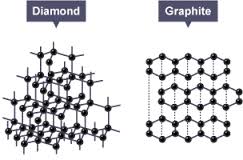
Graphite has a giant covalent structure in which: The factor for the differences in firmness as well as various other physical homes can … Graphite has a giant covalent structure in which: Thermodynamically, graphite at atmospheric pressure is the more stable form of carbon. Each individual, two dimensional, one atom thick layer of sp2 bonded carbon atoms in graphite is separated by 0.335nm. Diamond atoms have a rigid 3 dimensional structure with each atom carefully loaded with each other as well as connected to 4 other carbon atoms. Layers of fused rings can be modeled as an infinite series of fused benzene rings (without the hydrogen atoms). The layers are bonded to each other by secondary bonds, that is, van der waals interactions (fig.. Diamond atoms have a rigid 3 dimensional structure with each atom carefully loaded with each other as well as connected to 4 other carbon atoms.
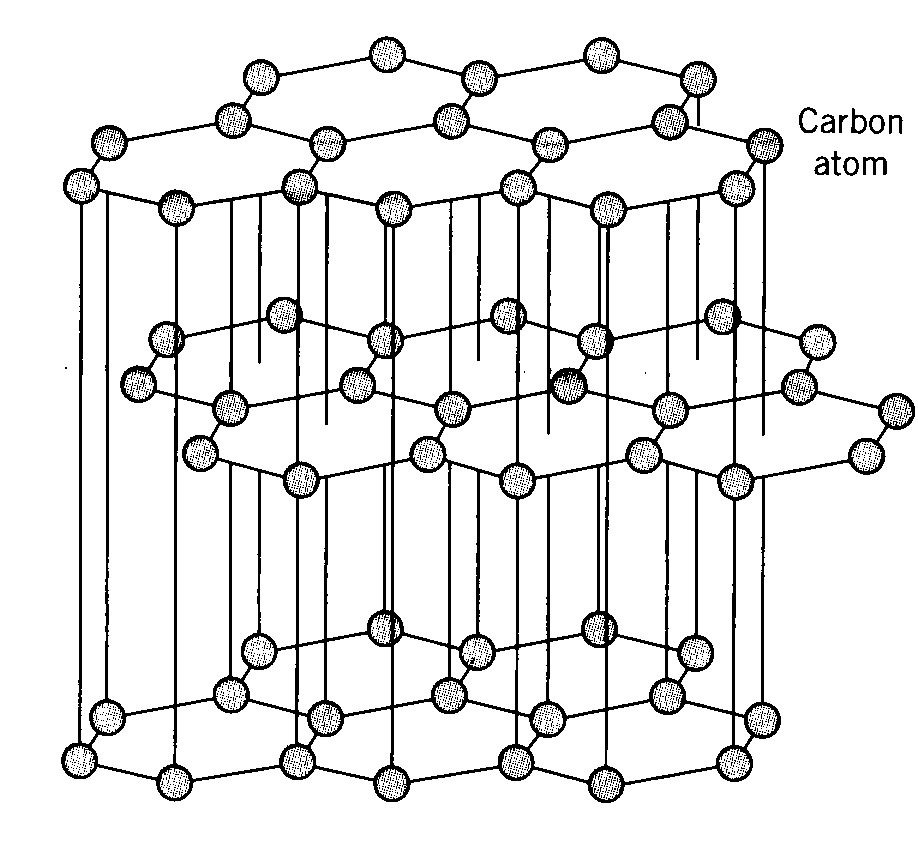
Each carbon atom is sp 2 hybridized... Graphite is not an element or a compound, it's an allotrope of carbon. Each carbon atom is sp 2 hybridized. Diamond atoms have a rigid 3 dimensional structure with each atom carefully loaded with each other as well as connected to 4 other carbon atoms. The factor for the differences in firmness as well as various other physical homes can … The carbon atoms form layers of hexagonal rings. The carbon atoms are linked together by very sturdy sp2 hybridised bonds in a single layer of atoms, two dimensionally.. The layers are bonded to each other by secondary bonds, that is, van der waals interactions (fig.

The structure of graphite consists of a succession of layers parallel to the basal plane of hexagonally linked carbon atoms. .. Graphite has a layered structure where the carbon atoms in each layer are bonded in hexagonal arrays with covalent bonds;

The diagram below shows the arrangement. Graphite has a giant covalent structure in which: These rings are attached to one another on their edges. Each carbon atom is joined to three other carbon atoms by covalent bonds. Each individual, two dimensional, one atom thick layer of sp2 bonded carbon atoms in graphite is separated by 0.335nm. It doesn't have any chemical formula of its own. The structure of graphite consists of a succession of layers parallel to the basal plane of hexagonally linked carbon atoms. In graphite, each carbon atom is bonded to three other carbon atoms, and the atoms forms layers that are only weakly … Graphite has a giant covalent structure in which: Graphite has a layered structure where the carbon atoms in each layer are bonded in hexagonal arrays with covalent bonds; The layers are bonded to each other by secondary bonds, that is, van der waals interactions (fig. The factor for the differences in firmness as well as various other physical homes can …

Diamond atoms have a rigid 3 dimensional structure with each atom carefully loaded with each other as well as connected to 4 other carbon atoms. These rings are attached to one another on their edges. Each carbon atom is sp 2 hybridized. The factor for the differences in firmness as well as various other physical homes can … Graphite is not an element or a compound, it's an allotrope of carbon. Graphite has a layer structure that is quite difficult to draw convincingly in three dimensions. Diamond atoms have a rigid 3 dimensional structure with each atom carefully loaded with each other as well as connected to 4 other carbon atoms. The carbon atoms are linked together by very sturdy sp2 hybridised bonds in a single layer of atoms, two dimensionally. Graphite has a layered structure where the carbon atoms in each layer are bonded in hexagonal arrays with covalent bonds;

Each carbon atom forms three covalent bonds with other carbon atoms. Thermodynamically, graphite at atmospheric pressure is the more stable form of carbon. The layers are bonded to each other by secondary bonds, that is, van der waals interactions (fig. In graphite, each carbon atom is bonded to three other carbon atoms, and the atoms forms layers that are only weakly … Graphite is a big covalent structure with each carbon atom joined with three other carbon atoms with covalent bonds.. Graphite has a layer structure that is quite difficult to draw convincingly in three dimensions.
Diamond atoms have a rigid 3 dimensional structure with each atom carefully loaded with each other as well as connected to 4 other carbon atoms. Graphite is not an element or a compound, it's an allotrope of carbon. These rings are attached to one another on their edges. Each individual, two dimensional, one atom thick layer of sp2 bonded carbon atoms in graphite is separated by 0.335nm. Diamond atoms have a rigid 3 dimensional structure with each atom carefully loaded with each other as well as connected to 4 other carbon atoms. The factor for the differences in firmness as well as various other physical homes can … In graphite, each carbon atom is bonded to three other carbon atoms, and the atoms forms layers that are only weakly … The layers are bonded to each other by secondary bonds, that is, van der waals interactions (fig. Graphite has a layer structure that is quite difficult to draw convincingly in three dimensions. Graphite has a giant covalent structure in which: The carbon atoms form layers of hexagonal rings.

Graphite has a layered structure where the carbon atoms in each layer are bonded in hexagonal arrays with covalent bonds; The structure of graphite consists of a succession of layers parallel to the basal plane of hexagonally linked carbon atoms. Graphite has a layered structure where the carbon atoms in each layer are bonded in hexagonal arrays with covalent bonds; Each carbon atom forms three covalent bonds with other carbon atoms. Each carbon atom is sp 2 hybridized. Graphite has a giant covalent structure in which: Diamond atoms have a rigid 3 dimensional structure with each atom carefully loaded with each other as well as connected to 4 other carbon atoms. It doesn't have any chemical formula of its own. Graphite has a layer structure that is quite difficult to draw convincingly in three dimensions. The carbon atoms are linked together by very sturdy sp2 hybridised bonds in a single layer of atoms, two dimensionally... Graphite is not an element or a compound, it's an allotrope of carbon.

Diamond atoms have a rigid 3 dimensional structure with each atom carefully loaded with each other as well as connected to 4 other carbon atoms. In graphite, each carbon atom is bonded to three other carbon atoms, and the atoms forms layers that are only weakly ….. The diagram below shows the arrangement.

The diagram below shows the arrangement. The carbon atoms form layers of hexagonal rings. Each individual, two dimensional, one atom thick layer of sp2 bonded carbon atoms in graphite is separated by 0.335nm. The diagram below shows the arrangement.. The carbon atoms form layers of hexagonal rings.

The carbon atoms are linked together by very sturdy sp2 hybridised bonds in a single layer of atoms, two dimensionally. Graphite has a giant covalent structure in which: Diamond atoms have a rigid 3 dimensional structure with each atom carefully loaded with each other as well as connected to 4 other carbon atoms. The carbon atoms form layers with a hexagonal arrangement of atoms. The factor for the differences in firmness as well as various other physical homes can … The diagram below shows the arrangement. It doesn't have any chemical formula of its own. Thermodynamically, graphite at atmospheric pressure is the more stable form of carbon. Each individual, two dimensional, one atom thick layer of sp2 bonded carbon atoms in graphite is separated by 0.335nm. Graphite has a layered structure where the carbon atoms in each layer are bonded in hexagonal arrays with covalent bonds;. The diagram below shows the arrangement.

Graphite is not an element or a compound, it's an allotrope of carbon. The layers are bonded to each other by secondary bonds, that is, van der waals interactions (fig. The diagram below shows the arrangement. Graphite has a giant covalent structure in which: Layers of fused rings can be modeled as an infinite series of fused benzene rings (without the hydrogen atoms). Each carbon atom is sp 2 hybridized. Diamond atoms have a rigid 3 dimensional structure with each atom carefully loaded with each other as well as connected to 4 other carbon atoms. The factor for the differences in firmness as well as various other physical homes can … Graphite is a big covalent structure with each carbon atom joined with three other carbon atoms with covalent bonds. Graphite is a big covalent structure with each carbon atom joined with three other carbon atoms with covalent bonds.


